The smarter AI gets, the more humanity matters
.avif)
"I'm looking for someone who can think along with me."
It's a phrase I hear often. In companies. From leaders who can't fill vacancies. In conversations about what's going wrong today. Not someone who knows everything. Not someone who can do everything. But someone who listens, connects the dots, asks the questions that haven't been asked yet. And that, it seems, is becoming harder to find.
What we've started to neglect
We live in a time when technology is getting smarter by the day. Systems write texts, analyse data, predict behaviour. Tasks that once required real expertise are now automated. So we ask a logical question: what is left for people to do? The answer is less technological than we might think. What stands out is not what machines do better. It's what we have started to neglect.
In many organisations, I see the same reflex. We invest in tools, dashboards, efficiency. We measure output, speed, performance. Anything visible and quantifiable gets attention. But what is harder to measure fades into the background: a good conversation, genuine attention, the ability to see nuance where others think in black and white.
There is nothing soft about empathy under pressure
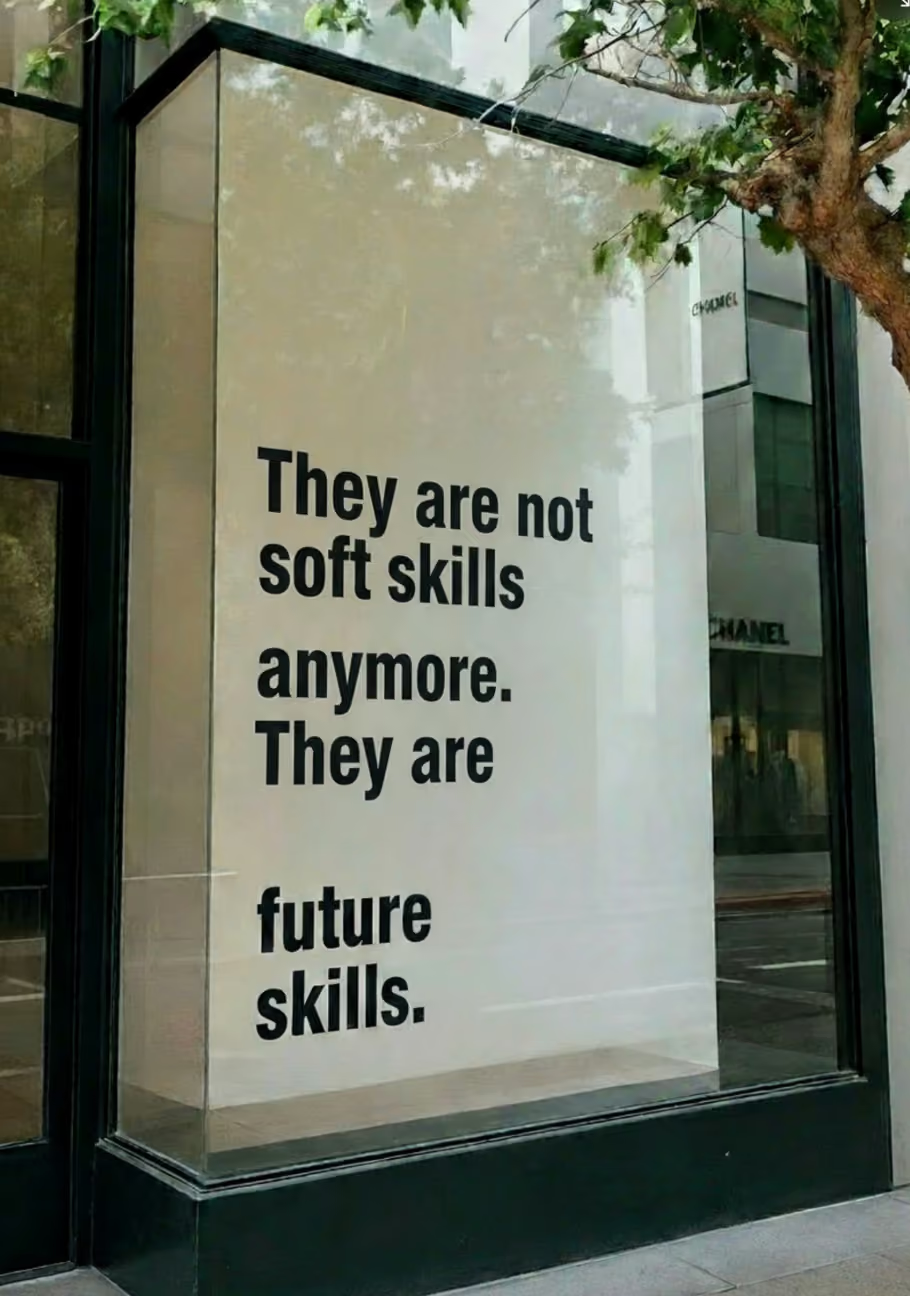
We have called these things "soft skills" for years. Nice for a team-building day. Something extra.
But there is nothing soft about empathy under pressure. Nothing soft about critical thinking when everyone else goes along. Nothing soft about truly listening in a world full of noise.
AI as a mirror
And that is precisely where the paradox lies. The smarter our systems become, the more important it is that we slow down. That we take time to think, to feel, to understand. Not because machines cannot do this. But because if we don't, we will lose the ability ourselves. Perhaps that is also the real lesson: AI is not a threat. It is a mirror. And what that mirror shows is not how redundant we are becoming, but how little we invest in what makes us distinct.
The future of work will not be decided by who is fastest. It will be decided by who can still do what cannot be automated. Having a good conversation. Tolerating doubt. Reading a situation before it has been fully put into words. That requires no technology. It requires attention. The real danger today is not that we will be replaced by AI. It is that we stop doing what makes us human.
This column was published in Het Belang van Limburg/Nieuwsblad.