Brussels Airlines
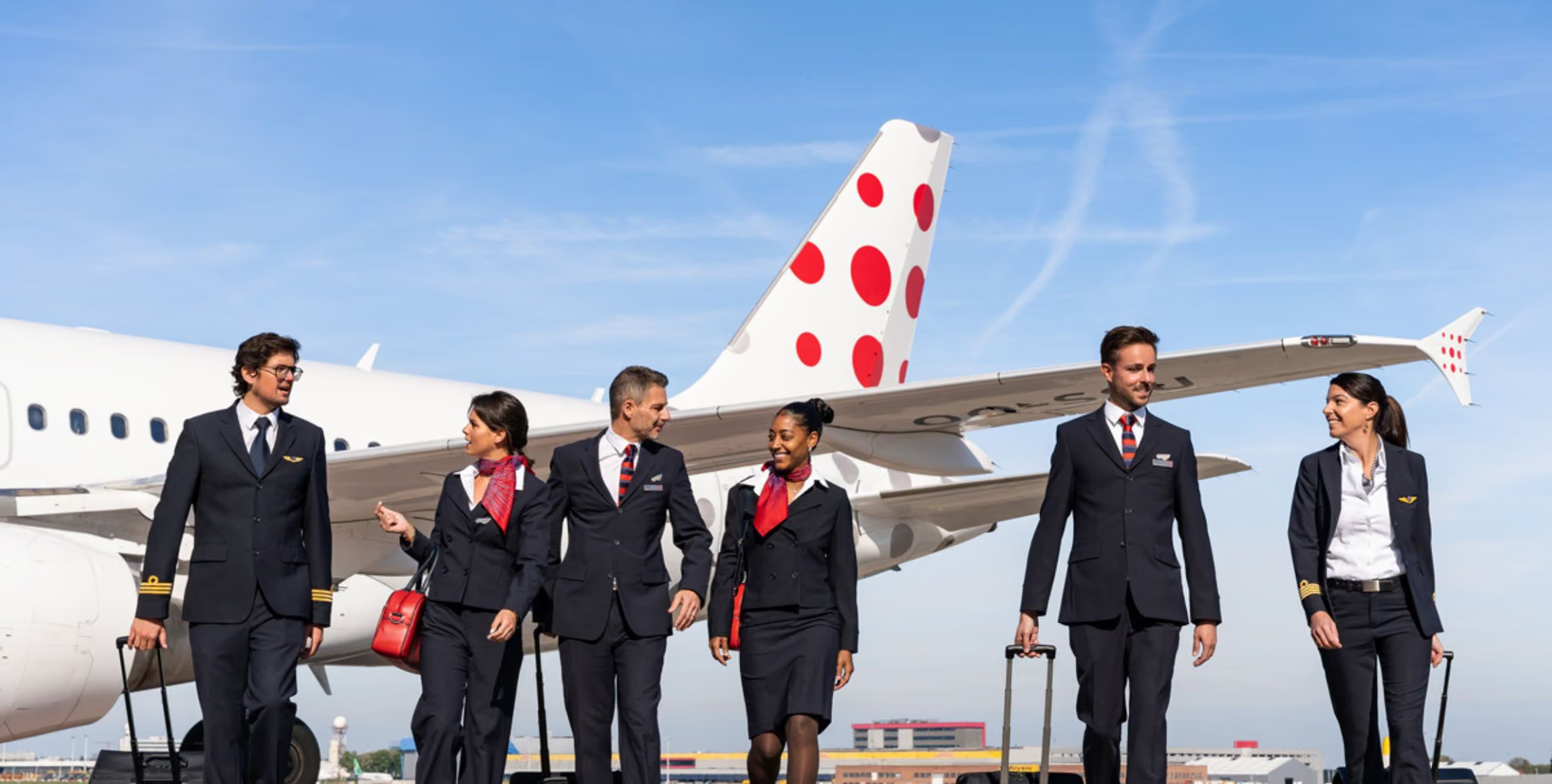
From irregular hours to smart recovery at Brussels Airlines
Sleep up around a third of our lives and plays a major role in how we feel and function. People who sleep well tend to have more energy, focus better and recover more effectively. For Cockpit & Cabin Crew, a fixed sleep rhythm is hard to come by. That is why Brussels Airlines wanted to support its employees with practical tools for better sleep, recovery and energy management.
The Challenge
One day your alarm goes off in the middle of the night for an early flight. The next day, you try to sleep during the daytime after a night flight. For Cockpit & Cabin Crew, that comes with the job.
Your internal clock therefore keeps receiving new signals. That can affect how quickly you fall asleep, how rested you feel when you wake up, and how much energy you have during the day.
Chronic insomnia is notably common among aviation staff. Sleep deprivation also affects your concentration, decision-making and mental wellbeing. In aviation, good sleep therefore plays a key role in alertness and safety.
Brussels Airlines wanted to give its employees structural support with knowledge and techniques suited to changing schedules and time zones.
Our approach
Better Minds and Brussels Airlines developed the sleep programme together, tailored to the daily reality of the crew. Central to this was Dr. Aisha Cortoos, sleep expert at Better Minds. She worked for many years as a sleep psychologist in the sleep lab at UZ Brussel. As a postdoctoral researcher within the VIPER (Vital Signs and Performance) research unit, she contributed to studies on stress, sleep and performance in extreme conditions, such as Antarctica, fighter pilots and astronauts. That experience helps her translate scientific insights into practical advice for people with irregular hours.
The programme starts with a keynote on sleep quality. Employees gain insight into how their internal clock and sleep pressure work, and what changing flight hours do to their sleep rhythm. They immediately receive practical tips they can apply to their own work schedule.
After that, they continue via Brainwise, a digital learning platform with a six-week sleep skills training, a sleep diary and practical exercises. This gives employees more insight into their own sleep pattern and lets them try out new habits step by step.
During the group coaching sessions, it becomes even more concrete. We look more closely at participants' cases and give tips tailored to their flight schedules, layovers and turnarounds. This allows employees to translate the insights from the programme into their own rhythm and daily practice.
The programme is not a one-size-fits-all solution. Every employee has a different schedule and a different body, so what works varies from person to person. That is why the programme mainly teaches employees how to discover for themselves what works for them.
The approach combines knowledge of the circadian rhythm with proven techniques from cognitive behaviouraltherapy for insomnia. This gives employees practical tools to support their sleep quality, energy management, focus and resilience.
Results
- The keynote received an average score of 8.8 out of 10.
- Employees still use techniques such as power naps, smart use of light and evening routines in their daily lives, months after the programme started.
- Participants experience an improvement in their sleep quality and mental wellbeing.
- The programme started with Cockpit & Cabin Crew and is expanding this autumn to office and ground staff.

"We find it particularly enjoyable to work with Better Minds.
A partner that fully matches our company culture and way of working: hands-on, agile and pragmatic, with the enthusiasm and drive to make it happen together. The programme is well designed and of a high standard.
And with Aisha, we have someone who delivers on that every single time. Highly recommended!"