...redirecting
Change & Adaptability Management
"People want to change, but they don’t want to be changed".
Behaviour only changes once the brain understands, accepts and internalises what is new. That is why we are firmly committed to changing behaviour and enabling real transformation, rather than focusing on processes.
People don’t always understand why something is changing.
They wonder what it means for them.
Or they feel resistance, doubt or uncertainty.
Understanding resistance starts beneath the surface
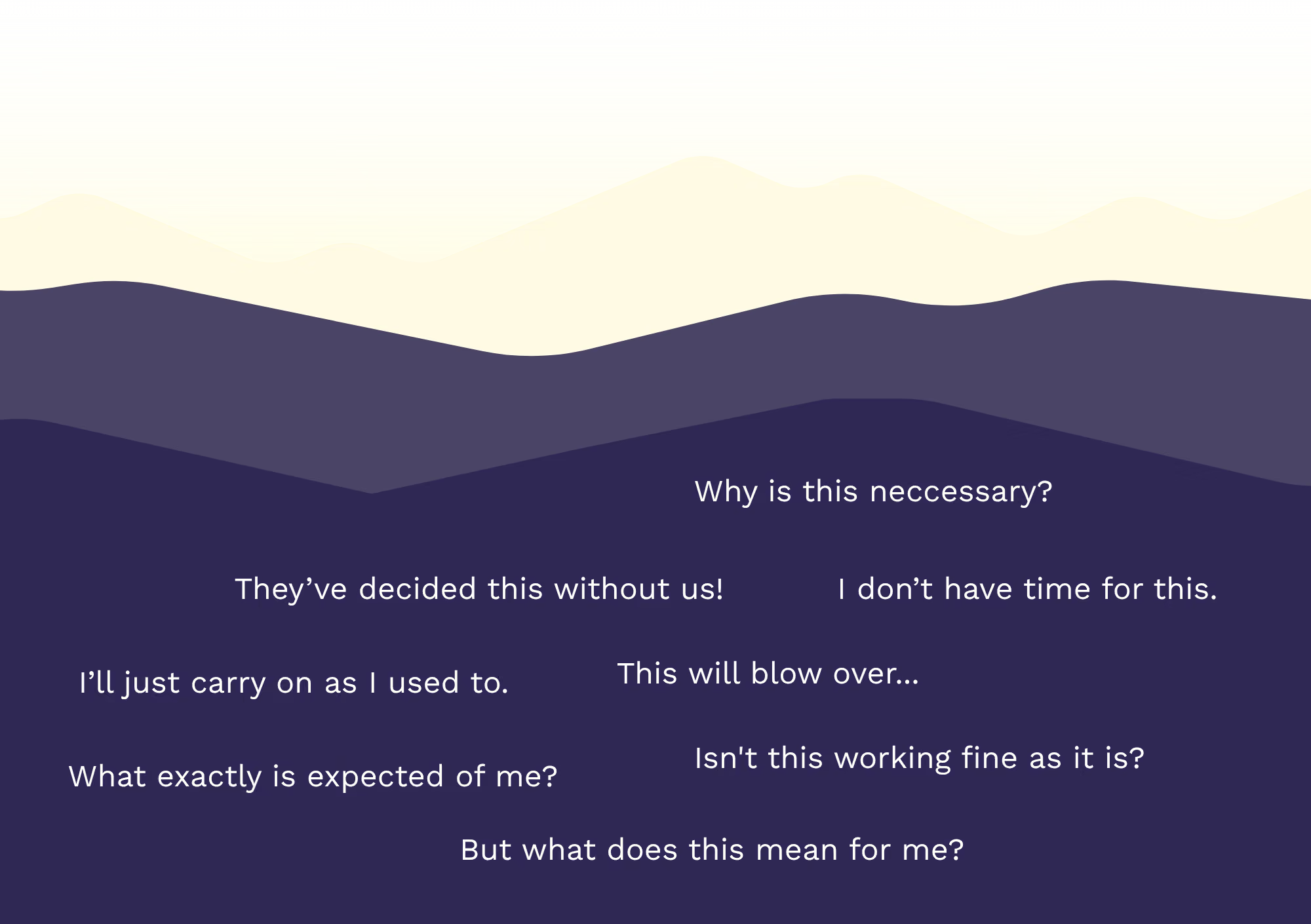
Resistance can be predicted
Resistance is not a problem, but a predictable brain response. The brain detects change as a potential threat and automatically switches to protection mode. But it is precisely in that resistance that the key to transformation lies. We therefore use resistance as a diagnostic tool: it reveals where the brain does not yet feel safe, clear or in control.
How our brain copes with change
Our brain is wired to conserve energy and seek predictability. That is why it clings to old patterns, even when they no longer work. When change comes unexpectedly, the brain automatically activates the threat centre (amygdala). This leads to doubt, resistance or avoidance; even before a person has a chance to think things through consciously.
At Better Minds, we translate neuroscience into behavioural design: small, repeatable behaviours that align with how the brain learns, decides and automates. In doing so, we create the conditions to sustainably transform behaviour. For example: we avoid cognitive overload by dosing information, we increase psychological safety to take the brain out of threat mode, and we build new habits through repetition and context anchors.
How we bring change to life
We select interventions based on what your employees’ brains need to learn and sustain new behaviours. Not one-off workshops, but a brain and behavioural architecture that builds new routines step by step. Always tailored to what the brain needs at every stage of change: safety, motivation, insight, practice and automation.
When people are left behind
When the brain does not feel safe or certain, you see a return to old habits, avoidance, delayed decision-making and passive resistance. Change remains on paper, but not in behaviour.
People understand the concept, but fail to make the mental shift.
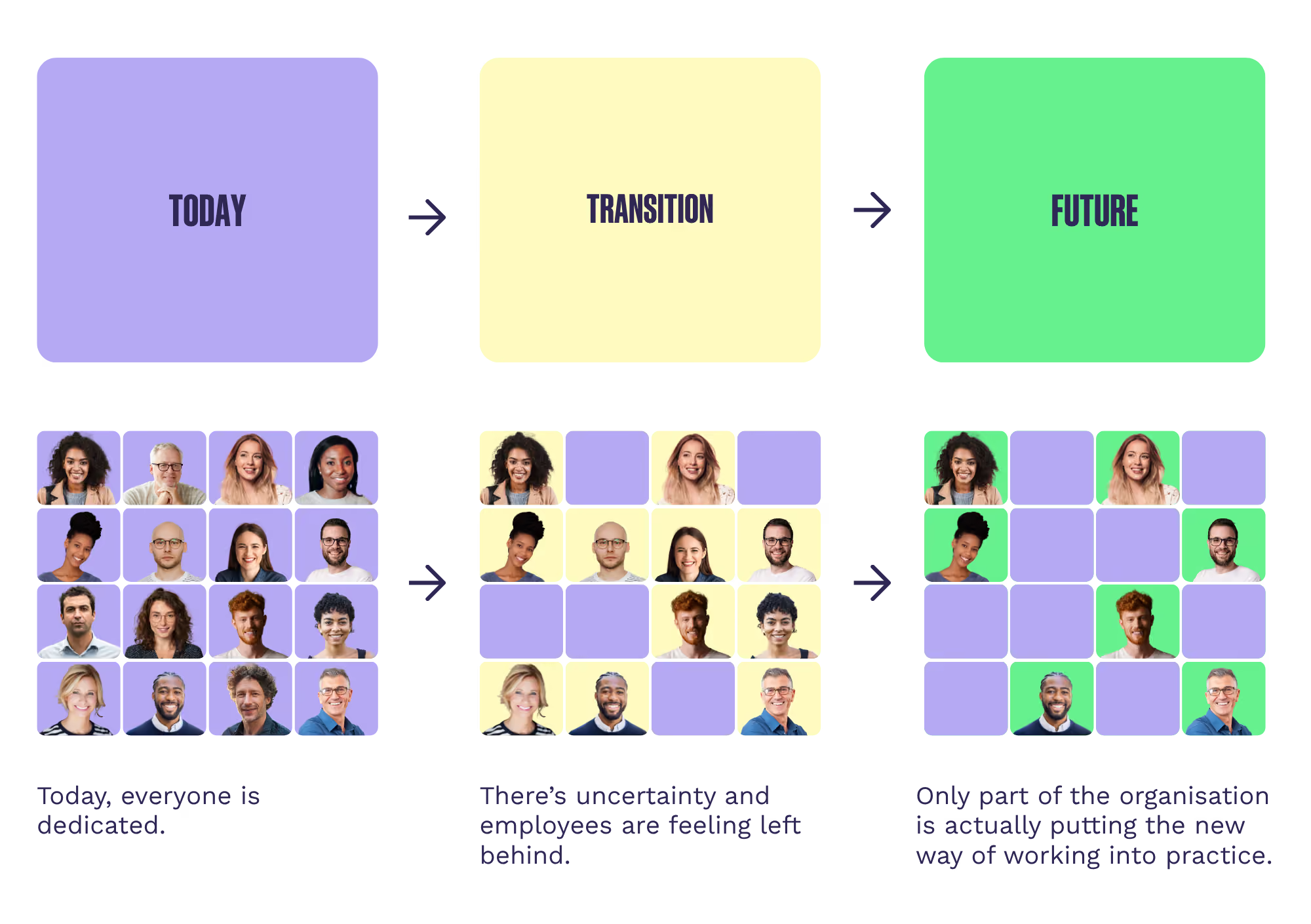
Change at every level of the organisation
In our programmes, we always work on three levels:
organisation, teams and individuals.
- Leadership creates a sense of security and direction,
- Teams develop new patterns of collaboration,
- And individuals form new habits.
Only when these three levels are aligned does a movement emerge that people themselves want to help shape.
From theory to practice
Using neuroscience as our guiding principle, we bring proven frameworks such as PROSCI and the ADKAR model to life within your organisation.
We translate these into tangible behavioural transformation within your organisation.
We translate each ADKAR phase into what the brain needs: safety (Awareness), motivation (Desire), clarity (Knowledge), practice (Ability) and reinforcement (Reinforcement).
Via open inschrijvingen bieden we opleidingen aan voor professionals die willen groeien, in kleine groepen met uitwisseling tussen deelnemers uit diverse organisaties.
The Result
Organisations we work with experience:
- Stronger collaboration and culture
- An organisation that continues to perform during times of change
- Managers who take on their roles with greater confidence
- Faster adoption because the brain understands, accepts and automates change.
- Less relapse because new routines are embedded in daily behaviour.
- Greater ownership because people make the mental shift from ‘having to’ to ‘wanting to’ and ‘being able to’.
Not by managing change more tightly,
but by actively involving people.
The Result
Organisations we work with experience:
- Stronger collaboration and culture
- An organisation that continues to perform during times of change
- Managers who take on their roles with greater confidence
- Faster adoption because the brain understands, accepts and automates change.
- Less relapse because new routines are embedded in daily behaviour.
- Greater ownership because people make the mental shift from ‘having to’ to ‘wanting to’ and ‘being able to’.
Not by managing change more tightly,
but by actively involving people.

“"Better Minds at Work heeft me geholpen om het werk te hervatten na een lange burn-out. Met de juiste tools om herval te voorkomen, voel ik me sterker dan ooit!"”
Let’s get Started
Or contact us for more information
.avif)
Looking for a tailor-made programme that fits with your budget and needs?
Whether you're ready to get started or want to learn more about our programmes, our team is here to help. Connect with us today and discover how we can elevate your team’s culture, well-being, talent, and leadership.








.avif)